
Finding San Luis Obispo Street Residents
A street-by-street search should collect evidence in a fixed order. The County Assessor and LandUseView can resolve an address to a parcel. The recorder can connect an owner or other party to an instrument. A permit archive can add a date and project role. A voter record is restricted, and a directory or telephone page is a historical snapshot. The safest wording is “recorded owner,” “listed party,” or “address-linked source,” unless two independent records support a stronger conclusion.
Use this flow for one address or for a whole block. Save the search date, spelling, unit number, and source URL as you go.
- Normalize the street name, direction, suffix, city label, and unit. Run the address through the County Assessor Property Information Search.
- Open SLO County LandUseView, select the parcel, and record the APN, jurisdiction, and nearby APNs.
- Use the assessor context to separate situs from tax mailing information. A mailing destination is not automatically an occupant.
- Search the Clerk-Recorder grantor-grantee index with the owner or party name. Read the legal description and instrument type before following a chain.
- Check the responsible city or county permit archive, then use restricted election procedures or historical reverse directories only for their permitted purpose.
Note: Parcel to owner to deed to historical address is a research chain, not a guaranteed list of everyone on a street.
San Luis Obispo Street Assessor Fields
The County Assessor Property Information Search is the key address tool. Search by address or APN, then record the situs, parcel number, legal or subdivision context, land and improvement values, use information, and whatever owner or mailing fields the public view displays. Public owner-name mass searching should not be assumed. Online detail can be suppressed for protected addresses or limited to current assessment information.
“Parcel” means the mapped assessment unit. “Situs address” means the physical location assigned to that parcel. “Mailing address” means where tax or assessment notices go. A trust, manager, post office box, or another property may receive mail. Homestead or homeowner exemption information may support an owner-occupancy clue, but it does not list every household member.
| Search or field | Format | What it contributes | Read with care |
|---|---|---|---|
| Address or APN | Text or autocomplete | Finds a parcel record | Use directionals and unit details |
| Situs | Address field | Physical parcel location | May differ from postal city |
| Mailing destination | Address field | Tax-notice route | Does not prove residence |
| Land and improvement values | Assessment fields | Parcel and building context | Not a household record |
| Map or legal context | Link or attribute | Subdivision, lot, or map clue | Use a surveyor for field lines |
LandUseView Along San Luis Obispo Streets
LandUseView is more useful for a street directory than a simple address pin because it lets a researcher inspect the parcels around the target. Search or autocomplete an address or APN, zoom until parcel lines appear, select the target, and turn on parcel, land-use, jurisdiction, district, or hazard layers as needed. Pan and click adjoining polygons to collect APNs. This method works better than guessing from an address range, especially in rural areas where one parcel can cover a large area.
The map is context, not a survey. A displayed line may be an assessment or mapping line rather than a surveyed boundary. A plat, recorded map, or legal description can supply stronger evidence. If the goal shifts from a whole street to one person, use the separate San Luis Obispo resident lookup workflow after the APN or record number gives a stable starting point.
- Parcel
- An assessment and mapping unit identified by an APN.
- Situs address
- The physical location associated with the parcel, distinct from a tax mailing address.
- Plat
- A recorded map showing a subdivision, lots, blocks, or related legal layout.
- Criss-cross directory
- A historical directory arranged by street or address rather than only by surname.
LandUseView can also expose the city or county jurisdiction that controls the next record. That matters because a San Luis Obispo mailing city can refer to county land, while a city permit archive may hold a different address history.
San Luis Obispo Records by Street
Address-keyed records do not all describe the same person. The assessor and GIS begin with a parcel. The recorder begins with parties to an instrument. A permit archive begins with a project. A reverse directory begins with a publication-era listing. A restricted voter file begins with an approved election purpose. The following coverage map keeps those roles separate while showing how a street directory search can join them.
| Record set | Keeper | Address evidence | Access route |
|---|---|---|---|
| Assessment parcel inquiry | County Assessor | APN, situs, values, publishable owner or mailing context | Web or counter |
| Parcel GIS | County GIS and Planning | Parcel shape, adjacent APNs, land use, jurisdiction layers | Free interactive viewer |
| Deeds, liens, and maps | Clerk-Recorder | Parties, transfers, legal descriptions, recorded references | Index from 1923; older counter |
| Permit and planning history | City or county custodian | Project, applicant, contractor, dates, inspection status | Archive, permit system, or request |
| Reverse or telephone directory | Library, archive, or LOC | Listed adult, subscriber, business, or address snapshot | Reading room or digital collection |
A shared APN can join an assessor result to a deed and permit, but it does not join every household member. For each row, write down what the record proves and what it cannot prove. This keeps the street directory useful without overreading a partial trail.
San Luis Obispo Street Deed Cutoff
The county has official records back to 1850, but the online recorder index begins in 1923. Purchasable or downloadable online images begin August 8, 2001. A street researcher who stops at the web cutoff can mistake a missing screen result for the end of a property chain. Search the current owner as grantee, inspect the acquisition deed, take the grantor and legal description, and repeat with the earlier grantor as grantee.
Typical index fields include party name and role, recording date, document number, type, book and page where applicable, cross-reference, and image or order path. Deeds of trust, reconveyances, liens, releases, easements, and maps can appear beside deeds. A beneficiary or lender role should not be rewritten as ownership. Use the legal description because street numbers and road names can change.
The Clerk-Recorder counter at 1055 Monterey Street, Suite D120, serves the older index books and images through in-person or order channels. The posted hours are 8 to 5 Monday, Tuesday, Thursday, and Friday, and 8 to 4 Wednesday, with transactions ending 30 minutes before closing. The recorded-documents page also provides title-search guidance.
Note: The remote index is a convenience layer, while the county’s 1850 record statement defines the full historical reach.
San Luis Obispo Permit History by Jurisdiction
Permits add construction and planning evidence to a street directory search. The City of San Luis Obispo directs researchers to InfoSLO and Socrata or Citizen Connect for permit, planning, inspection, and project history. Search by exact address or record number where the live system allows it. A result can name an applicant, property owner, contractor, project, milestone, or inspection status. A county address belongs with county Planning and Building instead.
A Land Use Documentation Request is different from a California Public Records Act request. Staff may prepare a written compilation of current zoning, variances, permits, exceptions, conditions, and code violations for a selected property, with a fee. Printed building plans may need copyright-owner permission for copying, although in-person viewing does not require those releases. Health information needs a HIPAA release.
The San Luis Obispo General City Records Archive is a useful source for public city records, while the city’s City Records Program explains the archive and request fallback. These sources make a street search more than an owner-name lookup because they can show how a building or parcel changed.
The capture below points to the city archive used for public records and permit-history research.
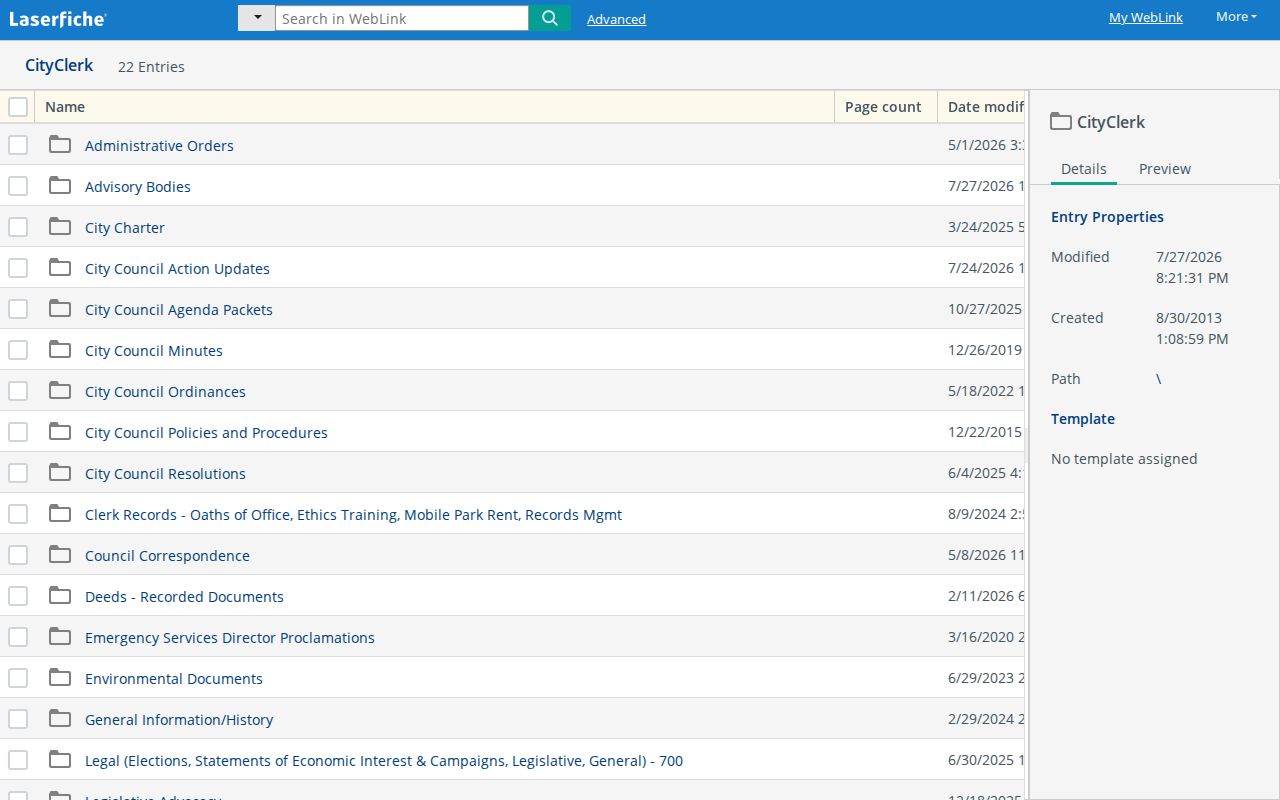
The archive image reinforces the jurisdiction check: a city record is useful only after the address is confirmed inside the city’s record geography.
Reverse Directories for San Luis Obispo Addresses
Historical reverse or criss-cross directories turn an address into a listed adult or subscriber for a publication period. The 1901 San Luis Obispo City and County Directory is free through the CSU Digital Archives and covers both city and county. The Library of Congress has a verified August 1961 to August 1963 telephone-page run. The San Luis Obispo Library adds newspapers on microfilm, yearbooks, and local-history material.
Read every abbreviation before drawing a conclusion. A printed entry can contain surname, initials, trade, residence or business address, spouse or widow notation, boarding marks, and cross-references. An advertisement can identify a proprietor and premises. It may omit rural people, children, unlisted numbers, or someone missed by a canvass. A directory date is a publication snapshot, not a live occupancy statement.
When a street record points to an earlier household, the San Luis Obispo city directory collections page is the better place to compare years and read the shelf context. Keep this street directory focused on how the address key works.
Note: Browse neighboring pages when OCR fails on narrow columns, decorative advertisements, Spanish names, initials, or compound surnames.
San Luis Obispo ZIP and Street Names
Postal labels do not set parcel or permit jurisdiction. ZIP 93401 and 93405 serve different parts of San Luis Obispo and can reach beyond strict city limits. ZIP 93406 is a San Luis Obispo PO-box ZIP, and 93407 is associated with Cal Poly as a unique institutional ZIP. Shell Beach can overlap with Pismo Beach naming, while rural communities carry strong postal identities without incorporation. The USPS lookup should verify the exact deliverable address.
No universal county street-renumbering year was verified. Bridge an old number through legal description, subdivision map, historic city records, the 1901 directory, and the recorder’s referenced map. “SLO” may be common in casual notes, while an official index may need “San Luis Obispo.” A street directory result can fail because the label changed, not because the parcel or person vanished.
The California Office of Historic Preservation resource provides the historical-record context used when an old street layout or survey is part of the search.
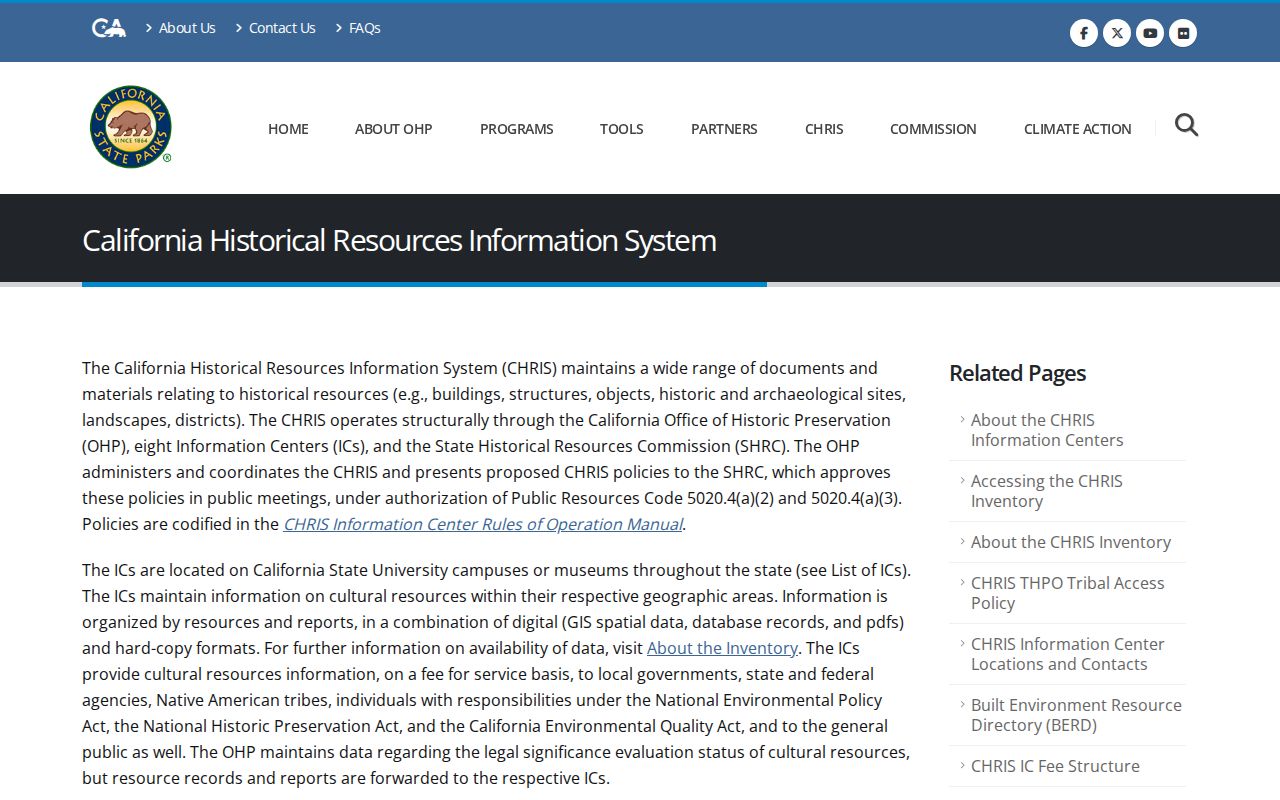
The image belongs with the address-variation warning because a historic resource file can point to the map or report that bridges an old street label.
San Luis Obispo Street Search Gaps
One APN may cover an apartment complex, a rural tract, or a multi-unit building. The parcel index may contain one assessment relationship while historical directories list a few adults and omit many others. Utility customer names are not a public household file. DMV address data is restricted. Safe at Home participants and other protected people may not appear at their actual address. A missing name is therefore a normal result of record scope.
Use the county or city request route when an existing, identifiable record is not online. The California Public Records Act ordinarily requires a determination within 10 calendar days, with a possible 14-day extension for unusual circumstances. It does not require an office to create a new resident list or answer a research question. Ask for a specific permit, map, agenda packet, or record series.
A street search should also distinguish a property owner, an occupant, a business contact, a historical subscriber, and a party to a case. These roles can overlap, but the source must say which one it documents. That discipline matters most in a county with rural parcels, postal mismatches, and long deed chains.
What a San Luis Obispo Street Directory Cannot Show
A street directory cannot promise a complete list of current residents. It cannot open a protected voter file, DMV address data, utility customers, sealed case material, confidential marriage records, adoption records, or Safe at Home locations. A reverse directory cannot show people who were omitted, and a tax mailing address cannot prove who sleeps at a parcel. Use public information for family history, reconnection, property curiosity, and civic research, then verify important facts with the custodian.
California Penal Code section 646.9 addresses stalking, section 422 addresses criminal threats, and Code of Civil Procedure section 527.6 provides a harassment restraining-order process. Elections Code section 18109 also makes misuse of voter data a misdemeanor. These rules are why a lawful San Luis Obispo street directory search stops at the source boundary rather than trying to defeat it.
Lawful use. Use address records for a legitimate personal purpose, such as genealogy, reconnection, property history, or safety awareness. Do not use a partial street trail to stalk, harass, intimidate, or harm anyone.
The final check is simple: name the source, date the result, state the role it documents, and avoid turning a record clue into a claim of present residence.