
San Luis Obispo City Directory Collections
The verified collections are narrower and more useful than a promise of a complete annual run. The 1901 San Luis Obispo City and County Directory is free in the CSU Digital Archives and has a downloadable PDF. The Library of Congress holds an early regional handbook and a verified August 1961 to August 1963 run of local telephone pages. The San Luis Obispo Library keeps local history books, yearbooks, documents, and newspapers on microfilm. The History Center and Cal Poly add archival and university material.
| Collection | Years or span | Where held | Access |
|---|---|---|---|
| San Luis Obispo City and County Directory | 1901 | CSU Digital Archives and Cal Poly Special Collections | Free record and PDF |
| Hand-book and directory of SLO and six other counties | 19th-century edition | Library of Congress | Free page images and OCR |
| County telephone pages | August 1961 to August 1963 | Library of Congress telephone collection | Digital images where available |
| Local newspapers | Run varies by title | San Luis Obispo Library | In-library microfilm |
| High-school yearbooks | Varies by school | Library Local History Collection | In-library research |
| Photographs, documents, and artifacts | Varied | History Center research room | Contact before retrieval |
Ask the library catalog or reference desk about Polk volumes, reverse directories, telephone books, and vertical files. Its public page does not publish a complete shelf-by-shelf directory-year list, so an exact missing year should be treated as a catalog question rather than guessed.
Inside the 1901 San Luis Obispo Directory
The 1901 volume is a local records story. It describes residents and businesses in both city and county, includes county descriptions, and carries advertisements. That countywide scope matters. Search community headings and rural entries instead of assuming that every name sits in one city alphabetic section. Advertisements can add a proprietor, trade, premises, partner, service, or street clue that a deed does not contain.
The digital item at CSU Digital Archives supplies a free record and downloadable file. Publication date is not the same as observation date because canvassing may have occurred before printing. An address or occupation should be checked against the nearest census, deed, newspaper, or later directory. A missing name may reflect rural coverage, a spelling variant, a missed canvass, or an unreadable page.
The volume is especially helpful between the 1900 census and later statewide civil records. It can place an adult in a community, show a business relationship, or suggest a street to test in a deed index. It cannot establish that every person at that address belonged to the same household.
Reading a San Luis Obispo City Directory Entry
A city directory entry is compressed print. Read the entry, the abbreviation key, the page heading, and the neighboring entries before expanding it into a family story. The 1901 inventory commonly includes a surname, given name or initials, occupation or business affiliation, and residence or business location. Some conventions add a spouse, widow notation, boarding or residence mark, and a cross-reference. A directory may favor adult heads, subscribers, or people reached by a canvass.
| Name | Surname, given name, initials, and sometimes a cross-reference or spouse clue. |
|---|---|
| Trade or affiliation | A business, occupation, school, or organizational connection printed for the publication period. |
| Address | House number, street, business premises, or rural community as printed. |
| Household mark | Spouse, widow, boarding, residence, or similar notation where the volume uses one. |
| Advertisement | Proprietor, premises, services, partner, and trade context that may sit outside the name list. |
- Criss-cross section
- The street-order portion of a directory, useful for moving from an address to listed names.
- Householder index
- An index organized around a head or principal adult, not every person at the address.
- Abbreviation key
- The printed legend that defines marks such as residence, boarding, widow, or cross-reference.
- Canvass date
- The period when names were gathered, which may precede the printed year.
Never silently expand an initial or assume that a business entry means a home. Record the printed form first, then make a separate note about the interpretation.
San Luis Obispo Library Directory Shelf
The San Luis Obispo Library Local History Collection is the main physical fallback for a city directory search. It holds county-history books, yearbooks, documents, and local newspapers on microfilm. Reference staff or Genealogy Library volunteers can help test a name, community, school, or date. Current volunteer hours and appointments are handled through the library or the San Luis Obispo County Genealogical Society.
Ask for the catalog record before making a long trip. A shelf question may reveal a Polk volume, telephone book, reverse directory, vertical file, or newspaper title that is not exposed in the web page. Microfilm is often better for an obituary, social note, marriage report, business notice, or address change than for a complete resident list. Publication accounts should be corroborated when the fact matters.
The History Center research room in the Carnegie Library building holds photographs, documents, vertical files, and artifacts, with much material stored off-site. Give staff names, communities, dates, and source types in advance. Cal Poly Special Collections and Archives is the stronger match for university students, faculty, campus publications, regional photographs, and manuscripts.
San Luis Obispo Telephone Pages 1961 to 1963
The Library of Congress telephone-directory collection includes a verified August 1961 to August 1963 San Luis Obispo run. Telephone pages can place a subscriber or business at a number and address for a narrow period. They are useful for tracing a past household, comparing a street spelling, or testing a business name. They are not a list of every adult, child, boarder, or person who did not subscribe.
Search the surname and address forms, then inspect nearby pages and the business section. A directory publication can lag the move or use an earlier canvass. Compare the telephone page with the 1960 or 1970 census, a deed, a newspaper, a permit, or an obituary. If a name appears only in a business listing, keep the result as a business affiliation.
The Library of Congress source can be browsed through its regional directory collection and related catalog tools. A scan is a primary printed source, but its coverage and OCR still need to be checked page by page.
Note: A telephone listing dates a subscriber relationship, not a complete household or a current address.
San Luis Obispo Directory Archive Partners
San Luis Obispo has an unusually strong university and archive layer. Cal Poly Special Collections can supply yearbooks, student newspapers, photographs, manuscripts, and regional records for people who may not appear in property material. A student or faculty trail may be clearer in campus sources than in a county parcel record. The university archive can also preserve a place name, club, building, or event that links a person to a date.
The History Center’s Carnegie Library research room adds photographs, documents, artifacts, and vertical files. Most holdings are off-site, so retrieval may not be immediate. Mission and parish archives can bridge the period before July 1905 civil registration, but each religious custodian sets access and sacramental privacy rules. These sources complement a printed volume rather than replace a certified civil record.
For a historical address, record the printed source, volume, page, entry wording, and image or reel information. Then compare it with a parcel legal description or later directory. A small difference in a street name, diacritic, initial, or compound surname can be the link between two entries.
The capture below comes from the Cal Poly collections and archives gateway, the relevant starting point for university and regional materials.
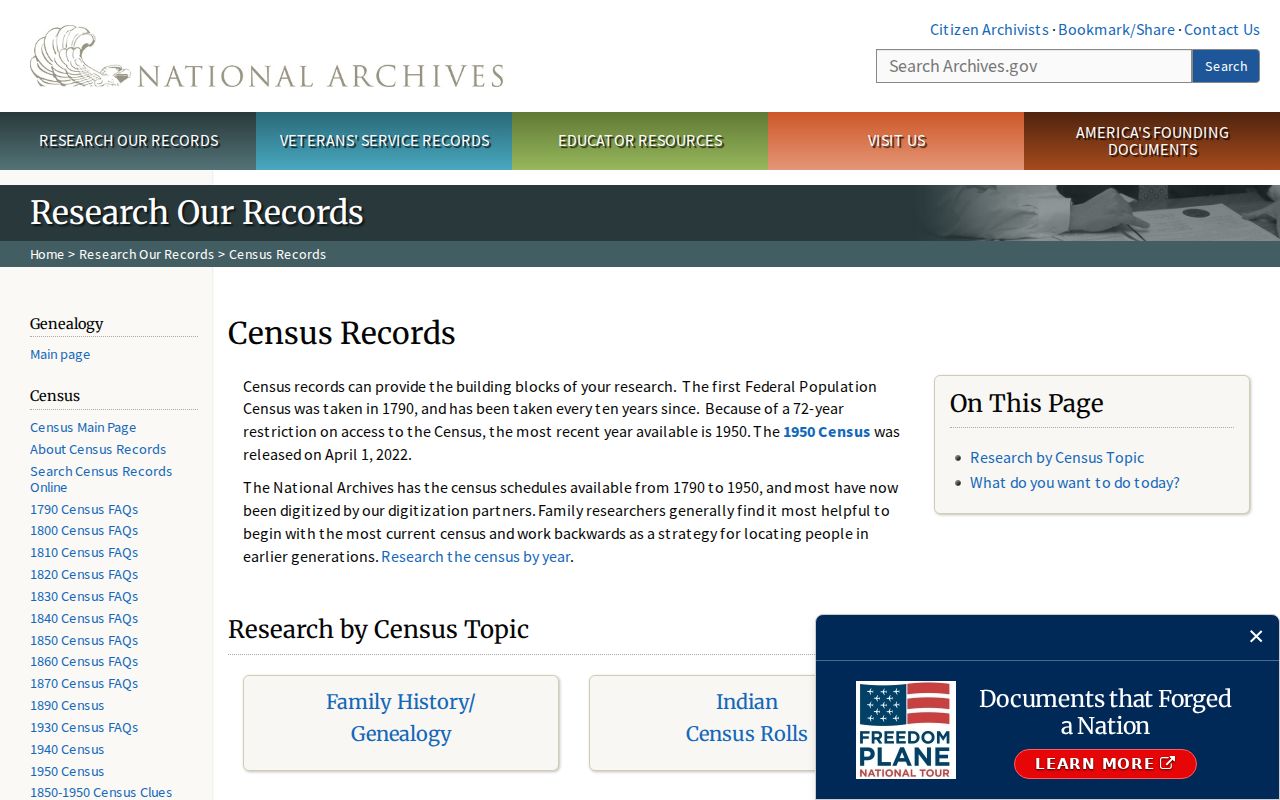
The image is a reminder that archival context matters: a directory or census page is part of a collection with its own geography and access rule.
San Luis Obispo Directory Timeline
A short timeline prevents a researcher from treating all directory years as one continuous run. Some collections are verified by a digitized item or catalog record. Others need a library search. The timeline below uses only the local milestones documented in the research.
| 19th-century edition | Library of Congress regional hand-book and directory includes San Luis Obispo County among several counties. |
|---|---|
| 1901 | Free San Luis Obispo City and County Directory in the CSU Digital Archives, with residents, businesses, descriptions, and advertisements. |
| August 1961 to August 1963 | Verified telephone-page run in the Library of Congress telephone-directory collection. |
| 1950 and earlier census context | Released federal population schedules provide a household date check; later releases follow the 72-year rule. |
| Current research room | Library, History Center, and Cal Poly access depends on catalogs, staff, appointments, and collection rules. |
No complete annual publisher run was verified for the county. Do not fill gaps with a guessed publication history. A catalog request that names the person, community, and year is more reliable than a broad claim that a volume exists.
Tracing San Luis Obispo Directory Years
Use a directory as one point on a timeline. The goal is to test whether the same adult, address, or household appears in more than one source. Keep the printed form and the interpretation in separate notes. That simple habit protects against an initial being expanded incorrectly or a business address being treated as a home.
- Capture the page number, heading, name spelling, address, trade, abbreviations, and any spouse or widow notation.
- Search the preceding and following directory or telephone year, testing initials, accents, hyphens, spaces, and Spanish or compound surnames.
- Pair the directory with the nearest federal census schedule. The census date and directory canvass date are not automatically the same.
- Use a deed or assessor parcel record to separate an occupant clue from recorded ownership.
- Use newspaper microfilm, obituary, probate, yearbook, or permit evidence to explain an arrival, departure, death, school link, or building change.
The National Archives census guidance explains the released schedule range and the 72-year access rule. Census schedules name a household on a census date, while a directory reflects a publication or canvass period. The two sources become stronger together because their dates and omissions are visible.
San Luis Obispo Directory Geography
The county has a county seat, seven incorporated cities, university land, coastal communities, inland towns, and unincorporated rural territory. A printed directory may use a community heading that does not match a modern city boundary. The Census Bureau source should be read with its geography label, such as county, incorporated place, census-designated place, county subdivision, or ZCTA. A population table is not a substitute for an address record.
Use a directory’s own heading, then compare the address against a deed, map, city archive, or GIS jurisdiction layer. Baywood Park and Los Osos may be grouped differently in catalogs. Shell Beach can be paired with Pismo Beach. Templeton, Nipomo, Oceano, and San Miguel carry strong postal identities while remaining unincorporated. These naming choices affect where the next record is held.
The Census Bureau geography documentation is the source for the statistical context shown here.
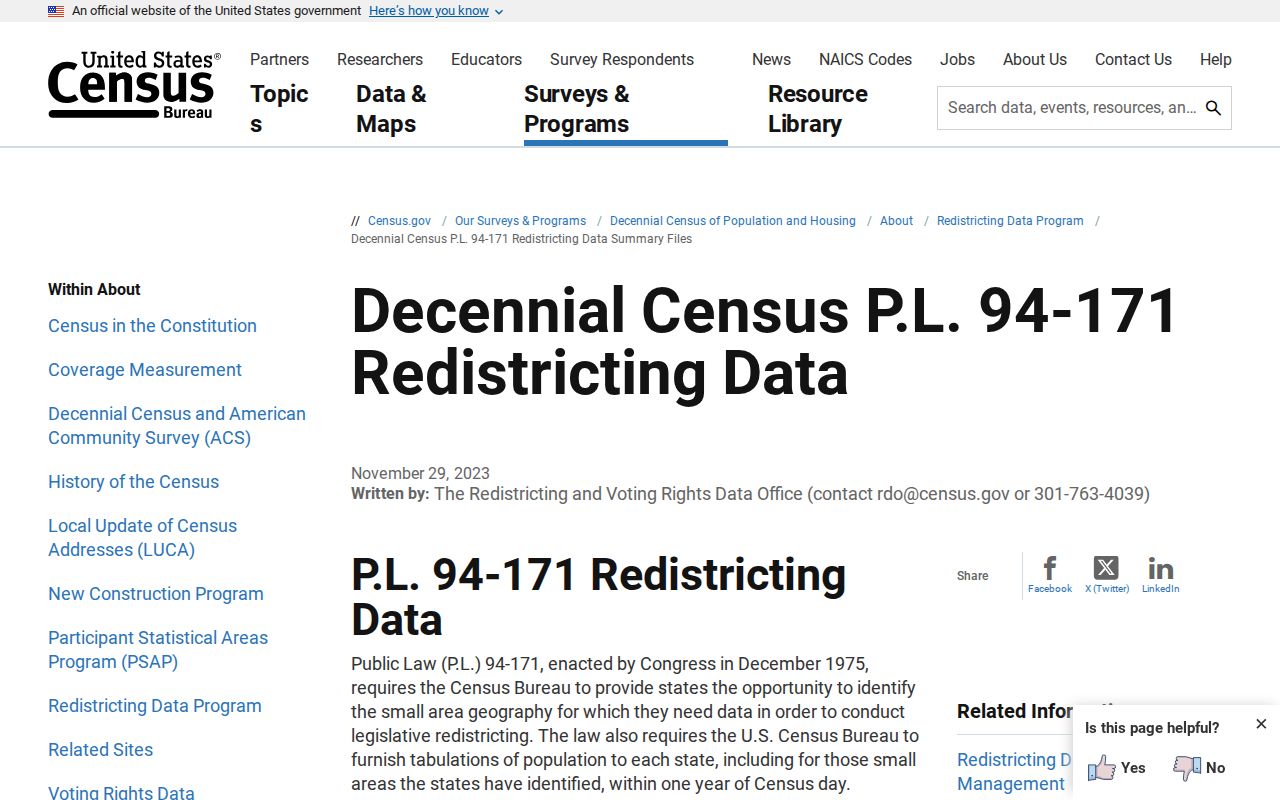
The capture is a reminder to name the geography and vintage before using a census table to support a directory or family-history conclusion.
Note: Search the printed community name, the governing jurisdiction, and the county name before declaring a historical directory entry absent.
San Luis Obispo Directory Archive Transfer
House-history research changed when the Central Coast Information Center closed on October 31, 2025. The California Office of Historic Preservation announced that San Luis Obispo and Santa Barbara cultural-resource files moved to the Southern San Joaquin Valley Information Center at CSU Bakersfield. A historic-resource report can contain prior-owner narratives, photographs, survey notes, and bibliographies pointing to deeds, directories, census pages, and newspapers.
The new custodian matters for a directory search because a house history may explain an old street number or identify an earlier source title. Treat the report as a finding aid and verify its cited primary records. The Office of Historic Preservation notice is the starting point for the transfer. San Luis Obispo’s city historic-preservation program is a companion source for districts, contributors, Mills Act properties, and the Master List.
This timely change is an example of why directory research needs an access trail. Shelves, portals, and custodians can move while the address remains. Write down the office, collection, date checked, and next request path.
San Luis Obispo Directories List Adults
A directory is not a household census. It may list a principal adult, a subscriber, a proprietor, a boarder, or a person reached by a canvass. It may omit children, unlisted people, rural residents, people using a different spelling, and anyone protected by a source rule. The word “resident” in a title describes the volume’s purpose, not a guarantee of complete coverage.
Use the directory to generate a lead, then test the lead in a second source. A 1901 name can be paired with the 1900 census, a deed, a newspaper, a mission or parish register, or an obituary. A 1961 telephone listing can be paired with a later directory, permit, or address record. A Cal Poly yearbook can place a student in a class year without proving a county residence.
That restraint is what makes the San Luis Obispo directory useful for genealogy. It preserves the printed clue while keeping ownership, occupancy, school affiliation, business affiliation, and current residence as separate claims.