
Sources for San Luis Obispo Previous Residents
A house-history search works across eras. No single record set names every person who occupied an address. The table separates the source’s date range, keeper, and evidence. The county’s official record statement reaches 1850, but the remote deed index begins in 1923 and online-purchasable images begin August 8, 2001. Historical household evidence comes from other collections.
| Source | Years it covers | Where held | What it shows |
|---|---|---|---|
| Recorded documents | 1850 to present; web index from 1923 | County Clerk-Recorder | Chain of title, liens, maps, legal descriptions |
| Online images | August 8, 2001 to present | Recorder portal | Instrument image or order path |
| City and county directory | Verified 1901 | CSU Digital Archives and library | Adult resident, business, and address snapshot |
| Telephone pages | August 1961 to August 1963 | Library of Congress | Subscriber, business, telephone, and address clue |
| Census schedules | 1850 to 1950 released | NARA, libraries, genealogy access | Named household on a census date |
| Permits and Sanborn maps | Varies by jurisdiction and edition | City, county, LOC, library | Building work, footprint, material, use, numbering |
| Obituary and probate | Varies by person and collection | Newspapers, court, library, archives | Death, relatives, representatives, successor clues |
Use the full source name and date checked. A catalog gap is not permission to invent a year run. The best next step may be a counter visit, mail order, library request, or focused record request.
San Luis Obispo Past Residents Start
The APN is the bridge from a modern address to an older chain. Search the County Assessor Property Information Search or LandUseView, select the exact parcel, and save the APN, situs, legal or subdivision context, and map reference. A street number can change. A lot, block, subdivision, legal description, or APN lineage is often more stable. For rural parcels, a ranch name, road variant, or legal description may work better than a postal label.
Keep the mailing field separate. It tells where assessment notices go and may be a trust, manager, PO box, or another property. It does not prove who occupied the parcel. If nearby parcels matter, click them in GIS and record their APNs before opening owner or deed records.
The county parcel viewer supplies spatial context, while the assessor supplies parcel information. Map geometry is not a survey. For a boundary dispute, use a recorded map, legal description, or licensed surveyor.
San Luis Obispo Past Residents Deed Trail
The deed chain is a backward sequence of recorded parties. Search the current owner as grantee in the Clerk-Recorder index. Inspect the acquisition deed and write down the grantor, legal description, recording date, instrument number, type, book or page, and cross-reference. Search that grantor as an earlier grantee. Repeat until the online index ends or the legal description no longer matches.
- Resolve the exact APN and current situs in assessor and GIS records.
- Find the present acquisition deed, then compare the legal description rather than relying on a same-name result.
- Carry the earlier seller forward as the next buyer search. Track trusts, entities, and representative roles without changing them into personal ownership.
- When the web index reaches 1923, move to Clerk-Recorder index books, the counter, a mail order, or an office instruction.
- Cross-check the resulting owners against directories, census schedules, permits, newspapers, obituaries, and probate before describing occupancy.
- Grantor
- The person or entity transferring an interest in the recorded instrument.
- Grantee
- The person or entity receiving an interest under the instrument.
- Chain of title
- The linked sequence of recorded transfers for a described parcel.
- Legal description
- The recorded land description that can remain useful when a street address changes.
A deed of trust, reconveyance, lien, easement, or map can be important without being a sale. Record the instrument type and party role exactly.
San Luis Obispo Past Residents After 1923
The online cutoff is the central address-history trap. The Clerk-Recorder says official records reach 1850, while the remote index begins in 1923. Online images that can be purchased or downloaded begin August 8, 2001. The earlier period is not erased. It moves to index books, the office counter, a purchase or order path, and archival substitutes.
The recorder counter at 1055 Monterey Street, Suite D120, is open 8 to 5 Monday, Tuesday, Thursday, and Friday, and 8 to 4 Wednesday. Transactions end 30 minutes before closing. The office phone is 805-781-5080. The recorded-documents page explains the index and title-search path.
If an older instrument cannot be obtained remotely, ask for the exact index year, party spelling, document type, book and page, or legal description. A focused request gives the custodian a usable record target. A broad question about every prior resident does not require the office to create a new list.
Note: An online stop at 1923 marks an access boundary, not the beginning or end of San Luis Obispo’s official records.
San Luis Obispo 1901 Directory Bridge
The free 1901 San Luis Obispo City and County Directory can fill the space between a deed clue and the 1900 census. It covers city and county residents and businesses, includes descriptions and advertisements, and may show an adult, trade, spouse, widow notation, business premises, or rural community. Read the printed abbreviation key and the page heading. A business advertisement can point to a proprietor without placing that person in a home.
Use the CSU Digital Archives item, record the page and wording, then compare the address to a legal description, newspaper, census, or later directory. The volume’s publication date may follow its canvass. A missing name can reflect a missed canvass, rural scope, relocation, spelling variant, or OCR failure.
The historical shelf itself belongs with the San Luis Obispo city directory collections when the task is to compare volumes and local holdings. Previous residents research uses the collection as one dated layer in the address chain.
Note: The 1901 volume is a snapshot of listed adults and businesses, not a complete household register.
San Luis Obispo Records: Telephone and Census
The Library of Congress has a verified August 1961 to August 1963 telephone-page run for San Luis Obispo. A telephone page can show a subscriber, number, business, or address at publication time. Search neighboring pages, business sections, and alternate name forms. Then pair the result with a 1960 or 1970 census schedule, deed, permit, obituary, or newspaper. The sources do not share one observation date.
Federal census schedules released through 1950 name a household on a census date. NARA and library databases explain the 72-year restriction for later schedules. A directory may show one adult where the census shows a household, while a deed shows only a party to a transfer. The difference is evidence about source scope, not a contradiction to erase.
- Capture the printed name, address, page, publication date, and any abbreviation.
- Search the nearest census year and write down the household as enumerated.
- Compare the two dates with the deed chain and any permit or newspaper report.
San Luis Obispo Records: Building History
Permits and maps help explain how an address changed while the title chain stayed continuous. City InfoSLO and Socrata or Citizen Connect can expose permit, planning, inspection, and project history for city properties. County Planning and Building holds the relevant county route. A permit may name an applicant, contractor, project, date, or inspection status. It does not turn the applicant into the occupant.
Sanborn fire-insurance maps show footprints, construction materials, uses, and street numbers. They do not name residents. Pair an edition with a directory and deed description. The research did not locate a single authoritative list of every San Luis Obispo County Sanborn edition or year, so check the Library of Congress or library catalog by city.
Coastal historic properties can add a useful layer. The city historic-preservation program points to districts, contributing properties, Mills Act participation, the Master List, and historic-resource material. A report’s bibliography may lead back to an assessor roll, census, deed, directory, or newspaper. Verify each cited source instead of copying a prior-owner narrative as fact.
The San Luis Obispo historic-preservation page is the starting point for this bridge.
San Luis Obispo Records: Obituary Endpoints
A previous resident trail often ends with a death, estate, or successor instrument. Local newspapers and microfilm can supply an obituary, death notice, family connection, community, or date. Probate files can identify a decedent, personal representative, heir, attorney, petition, and case timeline. Recorded successor deeds can connect the estate to later ownership. Each source should be named for its role.
Certified death records and cemetery registers remain stronger for official death facts. Funeral-home archives and cemetery memorial databases can help locate a date or relative, but they are not the same as a certified record. California vital copy categories distinguish authorized and informational copies. A genealogy lead should not be described as an identity document.
The research image below links to the CDPH authorized and informational copy guidance.
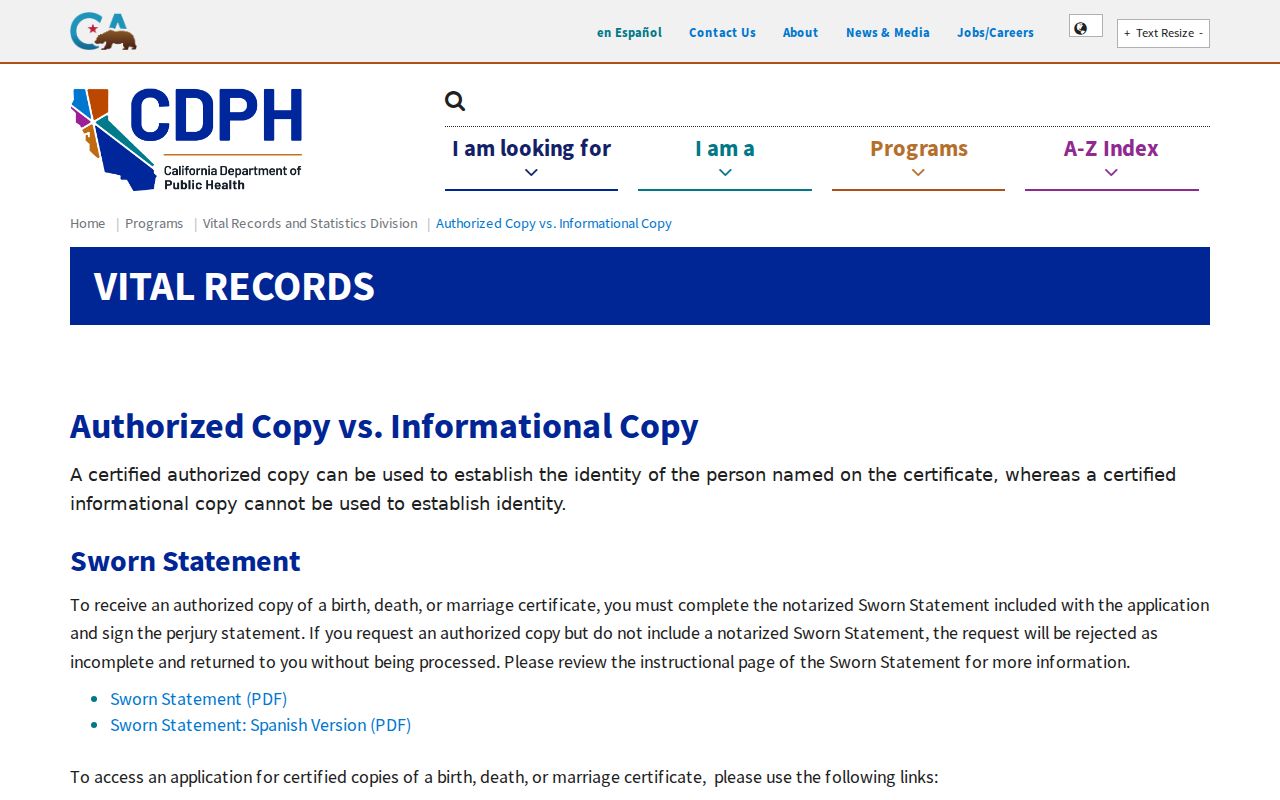
The image marks the point where a prior-resident clue must be matched to the correct copy category and eligibility rule.
For forms and ordering routes, the CDPH birth, death, and marriage forms hub provides the state path. The 2026 fee schedule and processing-time page add current ordering details, while the county registrars and recorders guidance explains which custodian handles which event.
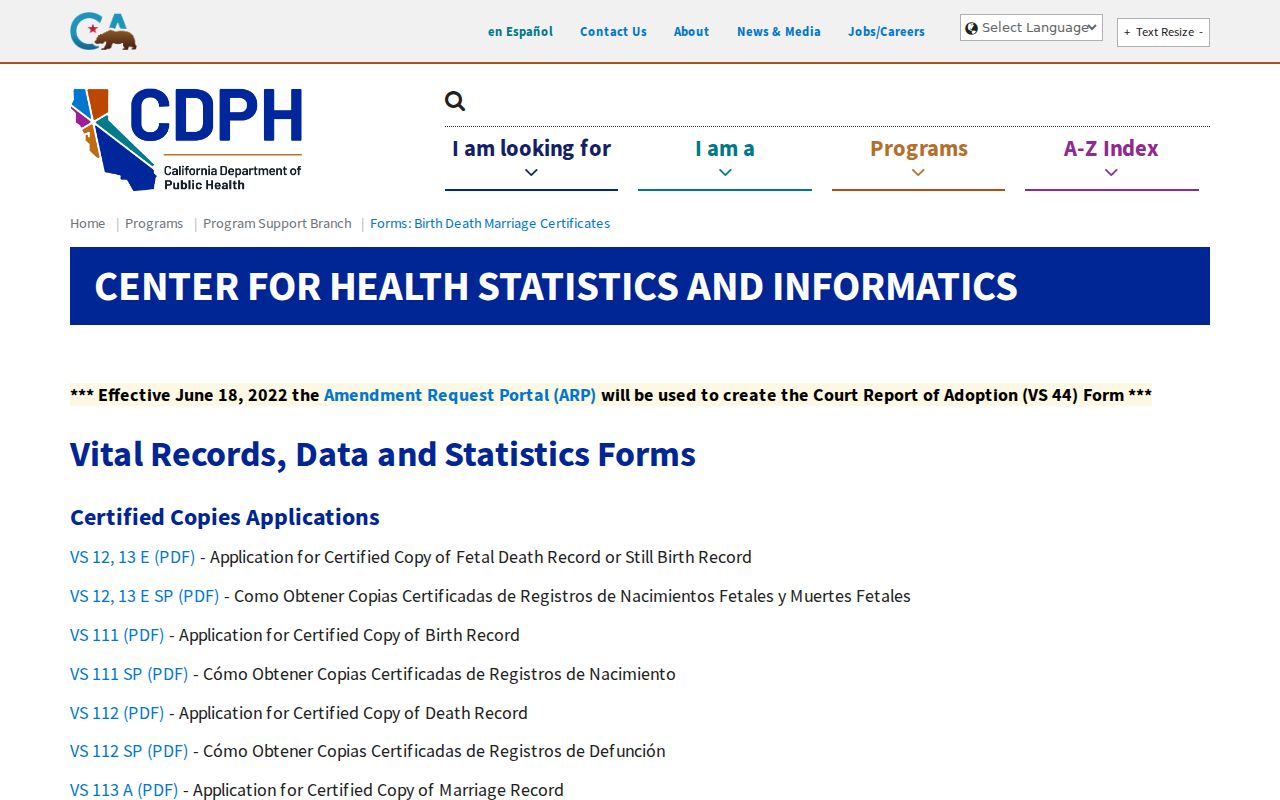
Forms help identify the custodian and request, while newspapers, probate, and successor deeds provide the historical trail.
San Luis Obispo Court Records Trail
A past resident may appear in a federal case rather than a county case. Federal matters for this area are heard in the Central District of California, and PACER searches party and case identifiers. The system has its own page charges and quarterly fee rules. Courthouse public-access terminals can be another channel. Sealed matters remain unavailable.
A federal docket is a finding aid. Match party role, case number, filing date, and district. A pleading address can be old or protected. Do not rewrite a litigant, attorney, registered agent, or business contact into a prior resident without a separate address record.
The capture links to PACER’s official access page.
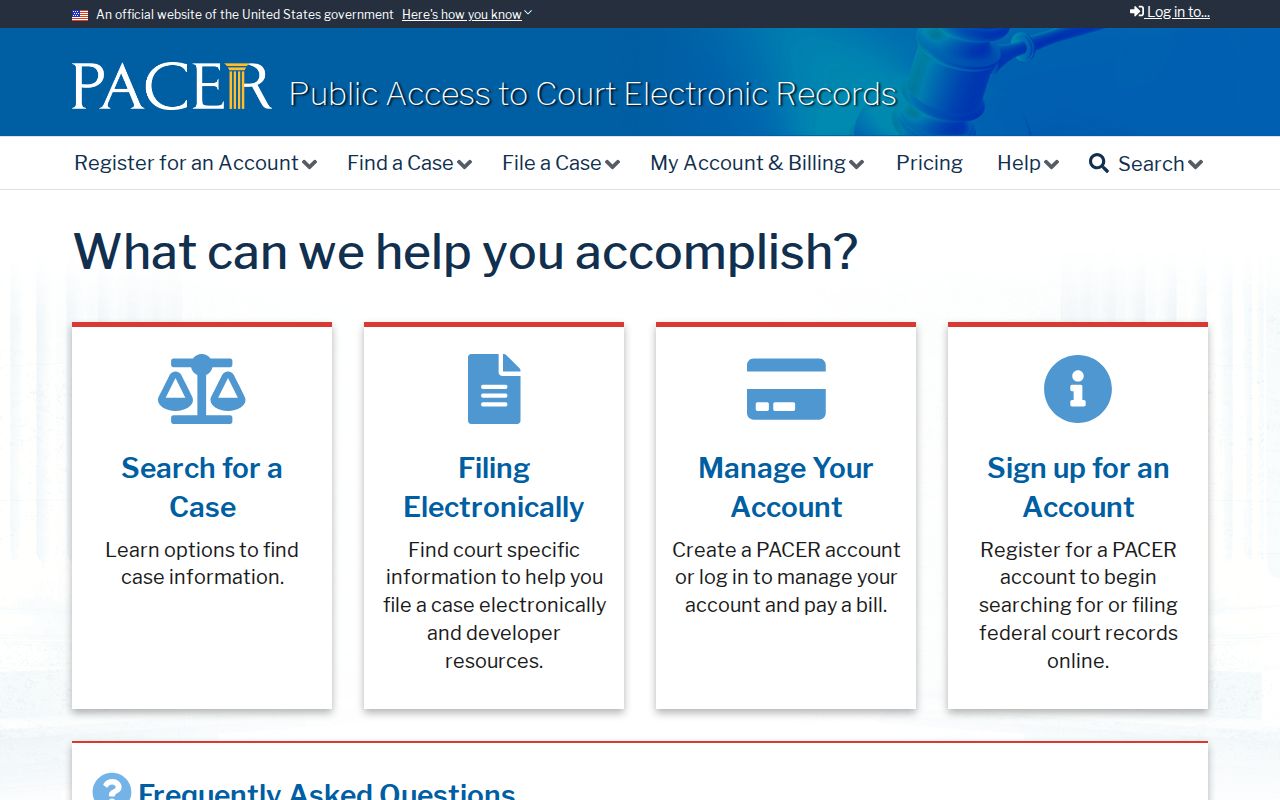
The image shows a federal access path that complements, rather than replaces, the San Luis Obispo Superior Court and recorder trails.
San Luis Obispo Past Households and Ownership
Ownership and occupancy can overlap, but they are different historical claims. A deed shows a recorded transfer. A directory shows a listed adult or subscriber. A census shows a household on one date. A permit shows a project relationship. An obituary or probate file shows death or estate context. A mailing address shows where correspondence went. Previous residents research becomes credible when the wording preserves those distinctions.
Use the address, legal description, and dates to build a sequence. If a street number changed, use a subdivision map, city archive, historic map, directory, or deed description. If the parcel became a multi-unit property, one APN may cover more than one household. If a protected person is absent, leave the gap in the record rather than filling it with a guess.
House-history boundary. Use past address records for genealogy, property history, and lawful personal research. A partial trail is not permission to stalk, harass, intimidate, or harm anyone.
Close the chain by citing the custodian, record date, instrument or page, and the precise role supported. That is the difference between a useful San Luis Obispo previous residents search and an unsupported list of names.