
San Luis Obispo Residents Directory Starting Points
Pick the first record for its evidence, not its convenience. The County Assessor links a parcel to an assessee, APN, situs, and mailing destination. The Clerk-Recorder shows a recorded party and legal description. The Superior Court reveals a litigant role and case chronology. A California license, business filing, obituary, yearbook, or city directory entry adds a date. It also adds a second name form. None of these alone proves someone lives somewhere today.
A strong San Luis Obispo residents directory trail keeps owner, occupant, voter, and litigant in separate columns. Add licensee, business registrant, and historical directory subject columns too. Write down the search date. An old address can anchor family history. A current parcel record may only show a mailing address, a trust, or a manager. Names with Spanish spellings, compound surnames, initials, and accents deserve several search forms in the resident lookup. Try OCR error variants as well.
- Start with the known name, address, APN, case number, license number, or entity number. A stable number narrows a same-name problem.
- Use the Assessor Property Information Search or LandUseView to identify the parcel and separate situs from mailing information.
- Use the Recorded Documents Search to inspect a deed, lien, map, or reconveyance, then follow the grantor and grantee chain.
- Use My Voter Status only for the voter’s own registration. Treat restricted voter extracts as a regulated request, not a casual list.
- For older people and places, move to the San Luis Obispo Library, Cal Poly archives, the History Center, census schedules, newspapers, and directory shelves.
Note: A name hit becomes useful only after a second record supplies a matching place, date, role, or document identifier.
San Luis Obispo Resident Records Offices
The offices behind a local resident records search do different jobs. The San Luis Obispo County Clerk-Recorder records real-property instruments. It also handles marriage, fictitious business name, notary, and elections services. The Assessor maintains parcel and assessment context. Voter-file access belongs to the elections office. Court, vital, library, and city records sit with other custodians. A good directory points to the right counter. It does not treat every result as a resident roll.
San Luis Obispo County Clerk-Recorder
1055 Monterey Street, Suite D120
San Luis Obispo, CA 93408
805-781-5080
San Luis Obispo County Assessor
1055 Monterey Street, Suite D360
San Luis Obispo, CA 93408
805-781-5643
County Elections Office
Clerk-Recorder service counter
San Luis Obispo, California
805-781-5228
A city address deserves a look at the city clerk or community-development custodian too. San Luis Obispo City Records holds agendas, minutes, ordinances, and resolutions. It also holds campaign disclosures, recorded deeds and easements, and advisory-body packets. A permit or public meeting record shows an official tie to a property or event. It does not show a current home.
The county's Clerk-Recorder service hub works as the first office map. It covers recorded documents, marriage, business-name, notary, and elections services.
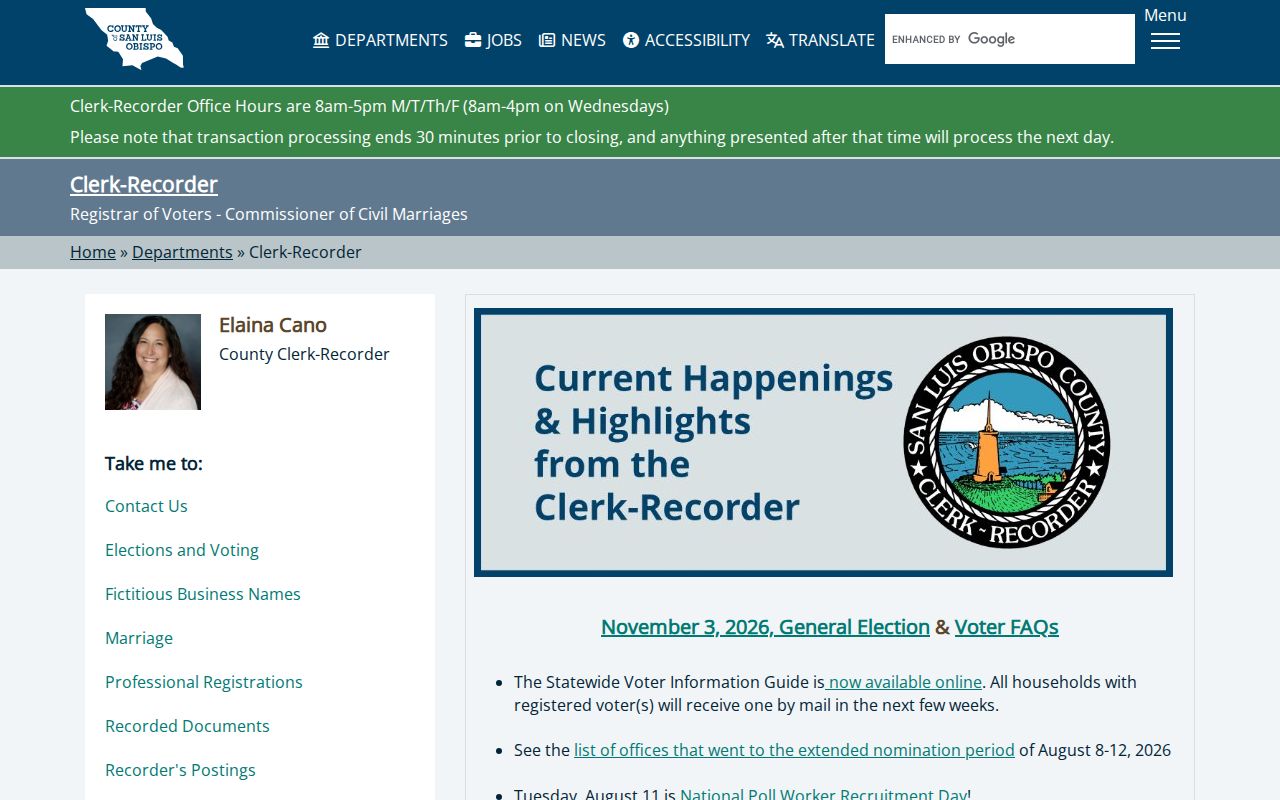
Several record families meet at the Clerk-Recorder, and each keeps its own access rule. That is why the office name matters before you request anything. The Assessor property search supplies the parcel side of the map.
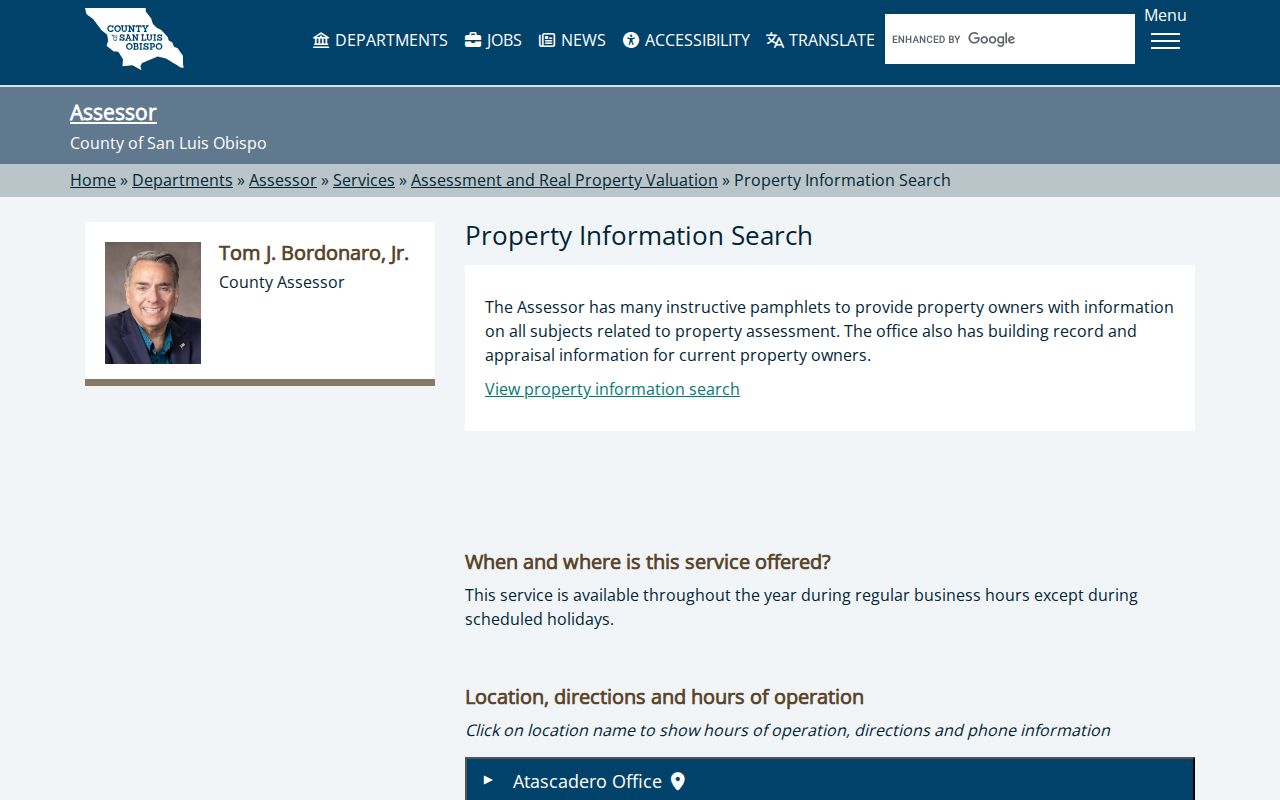
That view starts with a parcel and assessment record, not a complete household list.
San Luis Obispo Resident Parcel Search
Start with the County Assessor when the known fact is an address. The public property inquiry can tie an APN to a situs. It also covers legal or subdivision context, land and improvement values, use information, and a publishable owner or assessee context. Do not assume online owner-name searching is unrestricted. If a protected name or address is missing from the web view, that limits the display only. It does not mean the assessment record is absent from the property rolls.
LandUseView adds the map layer. Search by address or APN, select a parcel, and inspect nearby polygons. Layer controls can display parcels, land use, jurisdiction, districts, and hazards. Map lines are informative, not a survey. Remember that the assessor's mailing address is where tax notices go. The situs is where the parcel lies. That mailing address may belong to a trust. It may also be a manager, a post office box, or another property entirely.
| Portal field or control | Type | Use | Limit |
|---|---|---|---|
| Address or APN search | Text or autocomplete | Locate a parcel or site | Accepted formats can vary |
| Parcel attributes | Selected map record | Review APN, situs, use, and assessment context | Publishable owner detail may be limited |
| Layer list | Checkbox tree | Turn on parcels, land use, districts, and hazards | Not a boundary certification |
| Identify or select | Map tool | Click a parcel for attributes and nearby APNs | Does not show every household |
| Measure or print | Optional GIS tools | Make an approximate map view | Use a surveyor for a field boundary |
- Roll
- A custodian’s organized list, such as assessment records, with a defined record purpose.
- Index
- A finding aid that points to an instrument, case, or image rather than replacing it.
- Criss-cross directory
- A historical address or street-order source that can point from place to listed name.
- Parcel
- A mapped assessment unit identified by an APN and related legal context.
Note: The Atascadero Assessor counter at 6565 Capistrano Avenue offers a North County access point, while the main assessor counter remains in San Luis Obispo.
San Luis Obispo Resident Deed Index
San Luis Obispo deed research has three dates worth memorizing. The Clerk-Recorder traces official records back to 1850. The remote index only starts in 1923. Online images that can be purchased or downloaded begin August 8, 2001. So a dead-end web result often marks an access limit, not a missing deed. The record series itself runs far deeper than the screen. Any San Luis Obispo residents directory built on deeds has to respect that boundary.
The Recorded Documents Search works as a grantor-grantee index. Start with a current owner as grantee and inspect the acquisition instrument. Note the grantor and the legal description. Then search that prior grantor as an earlier grantee, and repeat. Deeds, deeds of trust, reconveyances, liens, easements, maps, and releases all surface here. One caution applies. A deed of trust beneficiary is not automatically the owner.
The counter sits at 1055 Monterey Street, Suite D120. Hours are 8 to 5 on Monday, Tuesday, Thursday, and Friday. On Wednesday, hours are 8 to 4. Transactions stop 30 minutes before closing. Older index books and images may need an office visit. They may also need an order, or a focused request. The office publishes useful title-search guidance. It helps when a legal description matters more than a changed street number.
Record the details that make a result durable. The indexed party and role, recording date, document number, and type all matter. Add book and page where present, cross-references, and the image-order path. An image adds vesting language, signatures, notary details, return address, and the legal description. Still, remember what it is. A recorded instrument is not a live occupancy list. A deed index is not a resident lookup.
The source behind this date split is the county recorded-documents service, at the county recorded-documents service. It is the direct starting point. Its stated cutoffs beat any generic promise that every deed is online. The service page also displays the search interface itself.
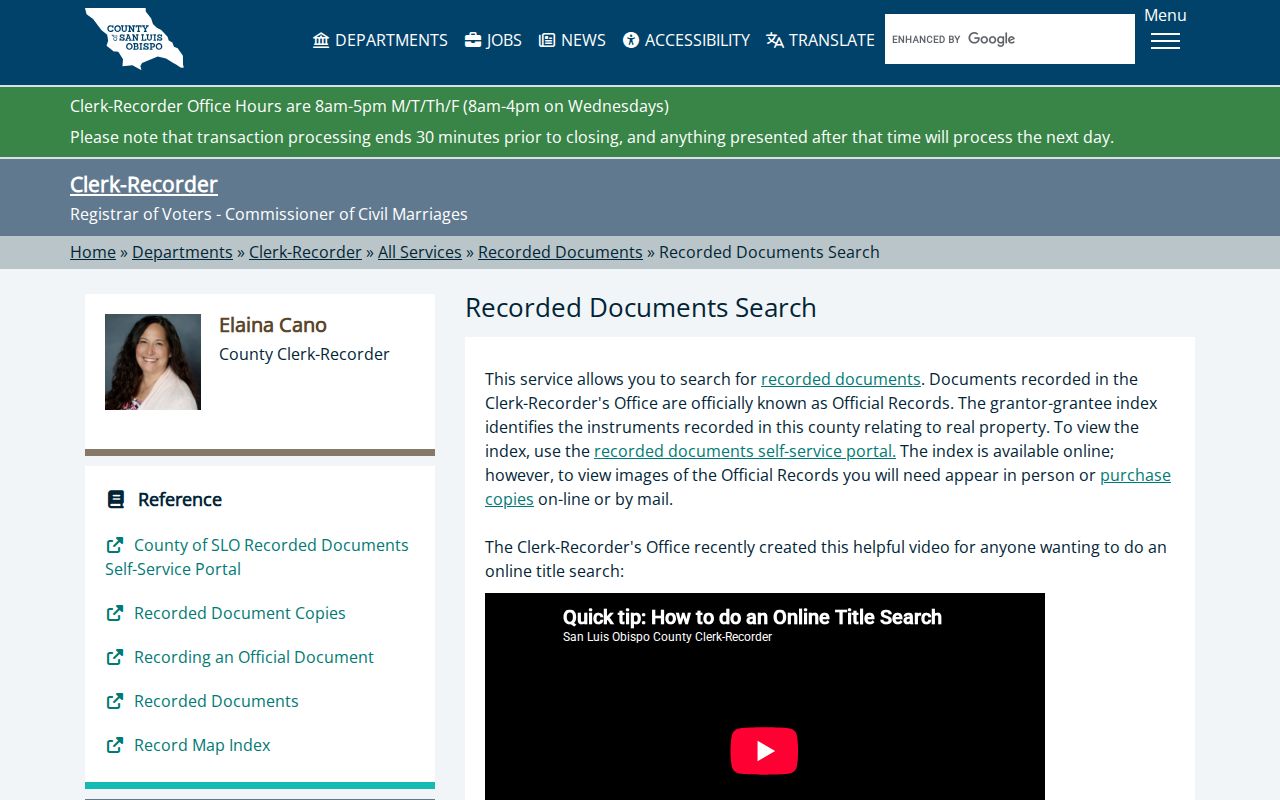
The portal is only one layer. The full record series continues at the counter, which is why the date rule matters for any San Luis Obispo deed search.
Note: Search the web index through 1923 first, then move to the Clerk-Recorder counter for the 1850 to 1922 gap.
San Luis Obispo Resident Voter Limits
California My Voter Status is a self-lookup. A voter enters a name, birth date, and an identification fragment. The response covers that person's own registration status. It also includes address details, party preference, vote-by-mail status, and election information. It is not a public name-and-address search for a San Luis Obispo street. No street directory of voters exists here. Government Code section 7924.000 and Elections Code section 2194 shield home addresses. They also shield phone numbers, email, identifiers, precinct data, prior registration, and signatures.
The county releases a restricted extract only through an application. That application demands identification, an original signature, a detailed approved purpose, and delivery controls. Scope choices include countywide, district, city or district, and precinct. The form names specific products such as MVMJ004, AVMJ010, AVMJ011, MVMR010, and AVMR171. The stated fee is $52 plus $0.50 per 1,000 registered voters. A $1 DVD charge applies as well. Approved data moves only by encrypted WinZip email. This is regulated election data, not a residents directory.
Privacy boundary. Use voter information only through the permitted self-lookup or an approved statutory purpose. Do not publish a walking list, infer a protected address, or use a record to stalk, threaten, or harass anyone.
California Safe at Home participants have a separate route. They should use the program's confidential registration process rather than the ordinary public-facing one. A missing voter result can mean confidentiality. It can mean inactive status or a changed registration. It can also mean a simple display rule. Never fill the gap with a guess from another source.
Self-service access runs through California My Voter Status.
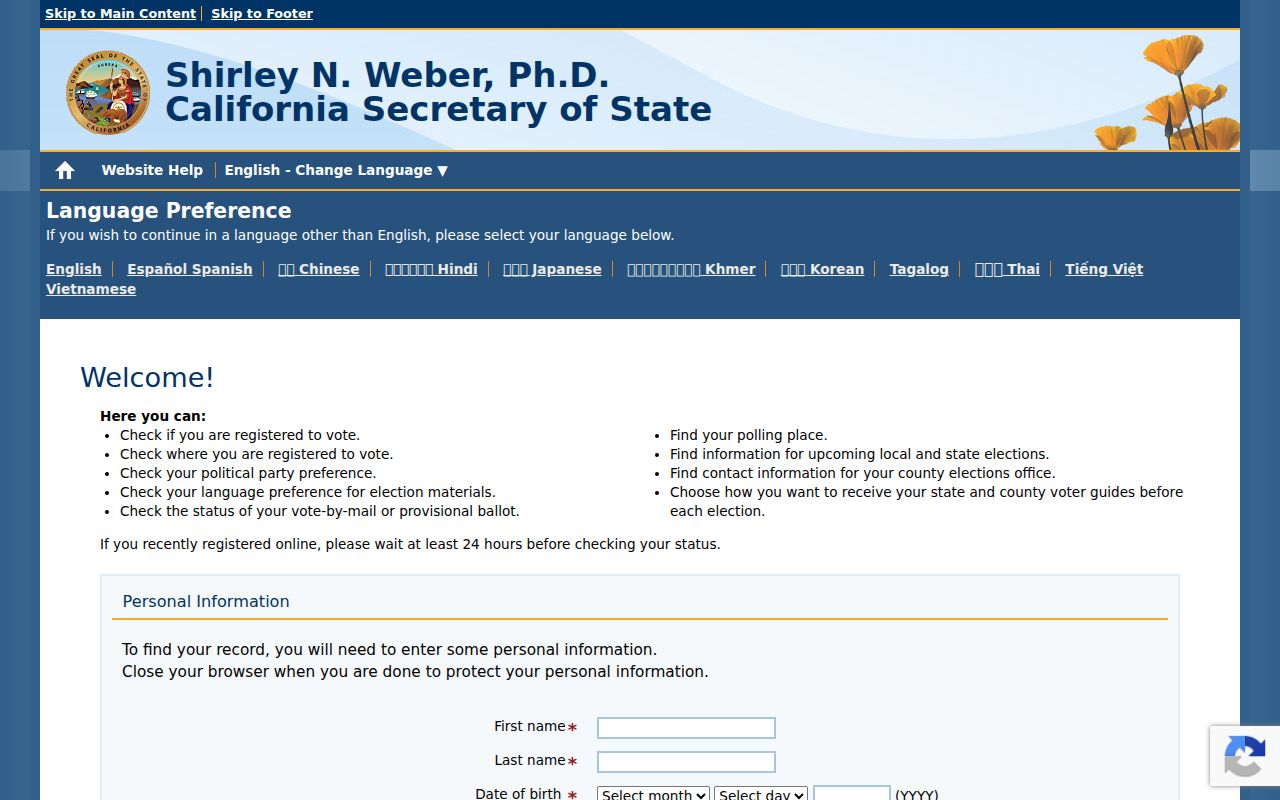
The access boundary is the story. A voter can verify a personal record, yet no public street list of San Luis Obispo voters is offered.
Current San Luis Obispo Resident Records
Current records answer questions best when their scope is named plainly. The assessor shows parcel and assessment relationships. The recorder shows parties to instruments. A court docket shows a party role in a case. A state license or business filing shows a professional or entity connection. City staff and public meeting records reveal official roles. A neighborhood contact page may name an officer or mailbox, but no complete public membership directory exists for San Luis Obispo County.
| Source | What it can show | Keeper | Access path |
|---|---|---|---|
| Assessor parcel inquiry | APN, situs, values, publishable owner or mailing context | County Assessor | Web or counter |
| Recorded-document index | Parties, instrument type, date, legal description path | Clerk-Recorder | Free index; copies or images may cost |
| Superior Court case information | Case number, parties, roles, dates, status where public | County Superior Court | Web, terminal, or clerk |
| License or entity search | Professional status or business filing relationship | California DCA or Secretary of State | Free state search |
| City records | Applicants, speakers, officeholders, permits, and public actions | City clerk or department | Archive, permit system, or CPRA route |
| Path | Strength | Limit |
|---|---|---|
| Official county, state, court, library, or archive record | Named custodian, defined fields, date, and correction route | Access limits and incomplete coverage still apply |
| Commercial compilation | May gather several clues in one interface | Feeds, costs, freshness, and same-name matching can be unclear |
Each row answers a different question. A business filing can identify a registered agent and filing address. A DCA result can show a license number, status, public address, and discipline link. Neither turns a business address into a residence. A city permit can name an applicant or contractor. The plans themselves may require permission to copy. In any San Luis Obispo record, the stated role is the fact.
San Luis Obispo Resident Vital Records
Vital records are not one open roll. California splits authorized certified copies from informational copies, and confidential marriages follow a narrower route. The county Clerk-Recorder handles county copies plus public and confidential marriage services. The California Department of Public Health keeps statewide records and forms. Recent births and deaths also involve the local registrar. A copy can confirm a life event without becoming public proof of a current address.
The 2026 CDPH schedule sets its fees by record type. Birth certificates cost $31 and death certificates cost $26. Marriage certificates run $19, and dissolution certificates cost $18. State processing runs roughly 4 to 6 weeks. Mail applications use VS 111 for birth, VS 112 for death, and VS 113A for marriage. An authorized copy requires a statutory eligibility category plus a sworn statement. That statement is signed under penalty of perjury and notarized for mail orders. Informational copies carry a legend stating they cannot establish identity.
- Birth
- Statewide registration begins July 1905. Authorized and informational paths differ; adoption material can be sealed.
- Death
- County and CDPH routes exist. Cause and medical detail follow separate access rules.
- Public marriage
- Use the county that issued the license or the CDPH route, with copy category limits.
- Confidential marriage
- Available through the issuing county clerk to a party or by court order.
- Dissolution
- The Superior Court decree and a CDPH certificate are different records.
Older research trips the county line. Work before July 1905 belongs with county registers, mission or parish archives, cemetery files, delayed registrations, and newspapers. Family papers also hold early evidence. The CDPH Vital Records hub shows which level of government holds what, state or county. Name the copy class you need. Do not assume an old record sits in the open stacks.
Ordering has its own split. The authorized and informational copy explanation lays out the difference before you pay a fee. A genealogy lead and a paper that proves identity are not the same thing.
The statewide vital-record page shows the main entry point for requests.
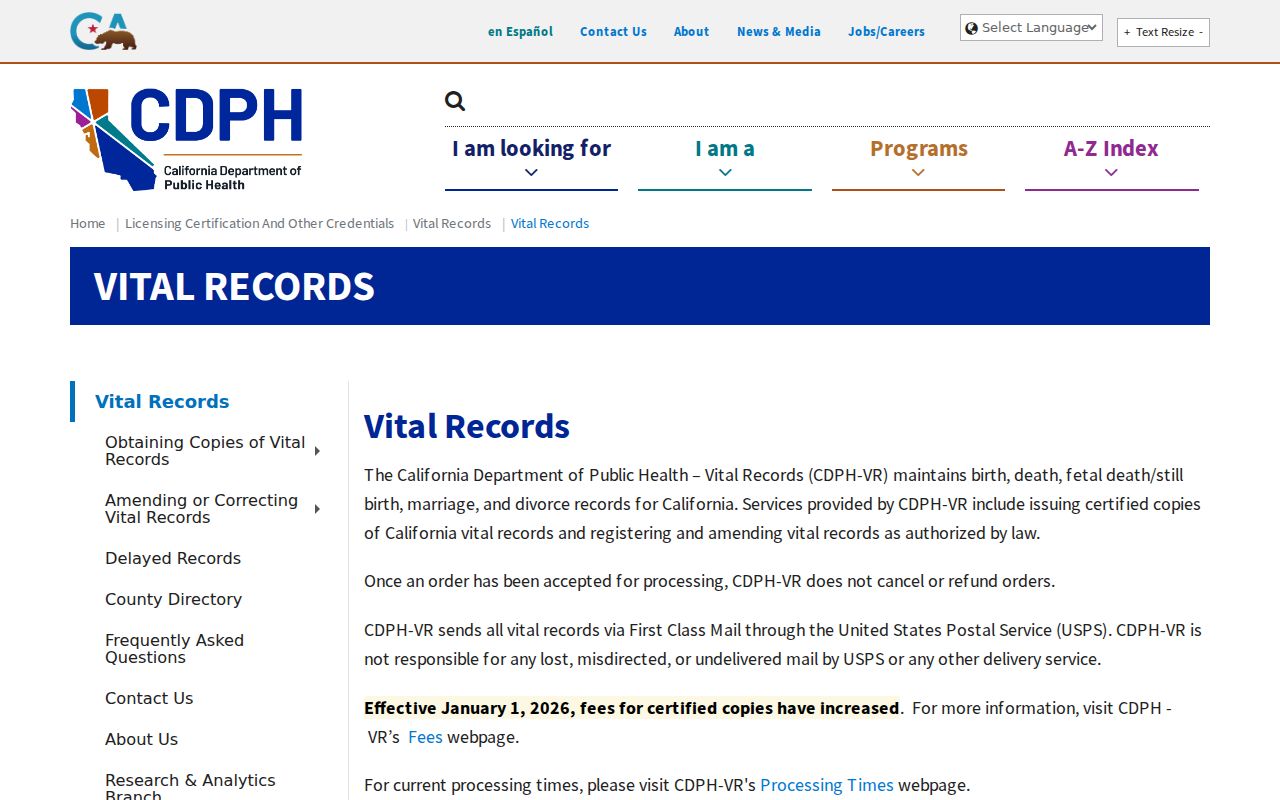
Before ordering any certificate, read the authorized and informational copy explanation. The distinction matters. An informational copy is fine for genealogy. But only an authorized copy can establish identity. Naming the copy category you need up front avoids a rejected order.
San Luis Obispo Resident Court Dockets
The Superior Court Online Case Information portal covers civil, criminal, family, probate, small claims, and traffic matters for San Luis Obispo County. The court allows it where it allows it. A case number is the best search key. Without one, try a party last name. A business name, first name, filing-year range, and case type can also work. Remember what a docket is. It is a register of case events. It is not the full clerk file and not a criminal-history certification.
A typical result shows the case number, caption, party roles, filing date, judicial officer or department, register-of-actions entries, hearing dates, and public status. Minute orders and pleadings usually take a clerk request, a courthouse terminal, or a copy order. Sealed, juvenile, adoption, and confidential family portions stay off the public view. Pleading addresses go stale, so verify before relying on one.
Probate dockets reward heir searches. They can name a decedent, personal representative, heir, attorney, and successor path in one place. Match the name to a date and a property record first. Then decide you have the right San Luis Obispo person. Federal cases run through the Central District of California and PACER. Access rules and document charges there differ from the county portal.
Note: A docket points toward a file; the clerk’s file, terminal, or certified copy controls when the exact document matters.
Historical San Luis Obispo Resident Directories
The free 1901 San Luis Obispo City and County Directory is the strongest local historical anchor on this shelf. It covers both city and county. It mixes resident and business entries, describes the region, and carries advertisements. Work the rural entries and community headings, not just the city alphabetic section. A single entry may hold surname, given name or initials, and trade. It may also list residence or business location, a spouse or widow notation, boarding abbreviations, and cross-references. When a mark puzzles you, the printed abbreviation key decides what it means.
The San Luis Obispo Library Local History Collection holds county-history books, high-school yearbooks, and documents. It also holds local newspapers on microfilm. The official page lists no complete shelf-by-shelf run, so ask the catalog or reference staff about Polk volumes, telephone books, reverse directories, and vertical files. Cal Poly Special Collections adds university records, photographs, manuscripts, student publications, and regional material. The History Center's research room in the Carnegie Library works with collections often stored off-site, so give advance detail.
The Library of Congress telephone pages include a verified run from August 1961 to August 1963. They can place a subscriber or business at an address for a publication period, though not every person in a household. Pair any directory page with the nearest census, deed, newspaper, yearbook, or obituary. For the full collections workflow, use the San Luis Obispo city directory page.
Why does the 1901 volume matter so much? It sits between the 1900 census and later statewide civil registration. It can reveal a trade, proprietor, boarding notation, or rural community that a deed never shows. A missing name may mean a missed canvass, changed spelling, relocation, or a page OCR cannot read. When text search fails, browse the nearby pages yourself.
San Luis Obispo Directory Library Shelf
When a web search dead-ends, the San Luis Obispo Library is the practical fallback. Its Local History Collection spans county books, high-school yearbooks, documents, and newspapers on microfilm. Genealogy Library volunteers are supported by the San Luis Obispo County Genealogical Society. They can orient a search by name, date, community, or record type. Confirm current volunteer hours and appointments through the library or the society.
The History Center was chartered as the county historical society in 1953. It keeps photographs, documents, vertical files, and artifacts. Most holdings sit off-site. A request naming a person, community, time span, and desired source gives staff a real chance at finding the right box. Cal Poly's archives fit better for students, faculty, university organizations, campus newspapers, and regional manuscripts.
Church and mission registers can bridge the era before California's statewide birth registration. That registration began in July 1905. Mission San Luis Obispo de Tolosa and parish archives set their own sacramental access rules. Newspapers supply obituaries, marriage reports, social notes, business notices, and address clues. Check a published item against a primary record when the fact matters. For the archival fallback, the History Center research page is the source.
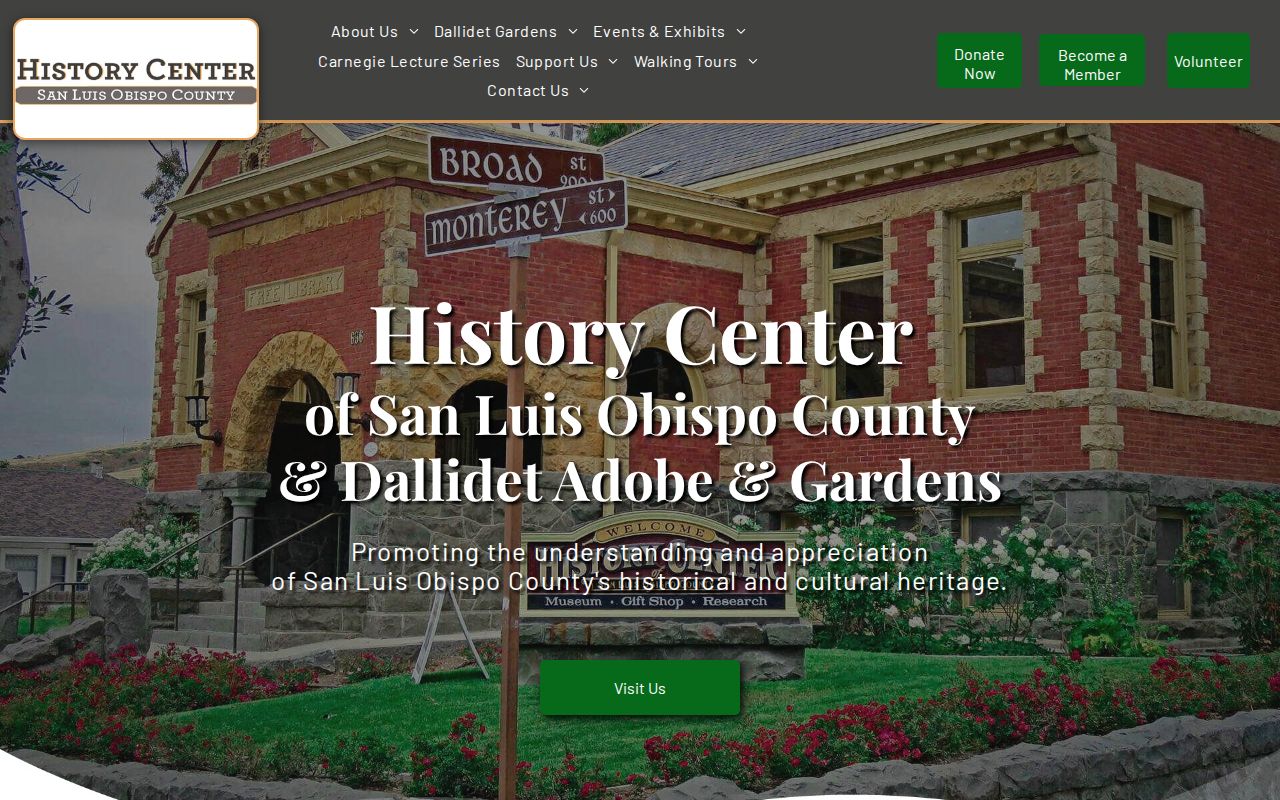
The page points to a research room and collection network, not a searchable current resident roll.
San Luis Obispo Resident Privacy Stops
Public records carry protected corners. California's Safe at Home program shields eligible participants behind a substitute mailing address. Participants get mail forwarding, a service-of-process agent, and confidential voter registration. Voter addresses and identifiers sit under their own access rules. The Driver's Privacy Protection Act walls off DMV data. Recorded documents also redact Social Security numbers and other sensitive identifiers. That is why a careful San Luis Obispo residents directory may name an owner. Yet it stays silent about the household.
State law adds consumer tools. The California Consumer Privacy Act and the California Privacy Rights Act let qualifying consumers ask to know, delete, correct, or limit use of sensitive data. They can also opt out of sale or sharing, subject to exemptions and verification. The DELETE Act builds a state deletion mechanism for data-broker activity. An opt-out can pull a name from a commercial compilation. It cannot erase an official deed, court file, or any legally retained public record.
For specifics, the Safe at Home guidance covers eligibility and substitute-address rules. The California Attorney General privacy guidance explains state rights. Never work around a protected address or publish a walking list. And never stretch a partial result into a claim about someone's home.
Personal research only. Records can support genealogy, reconnection, property curiosity, and civic research. They are not permission to stalk, threaten, intimidate, or harm another person.
San Luis Obispo Resident Business Trails
A person known through a trade leaves a different paper trail. The California Secretary of State's bizfile search takes an entity name or number. It can return the legal name, status, formation jurisdiction and date, agent, filed addresses, and filing history. County fictitious business name statements tie a registrant to an assumed name. The Department of Consumer Affairs search filters by board, license type or number, business or personal name, city, and county.
License results may show status, issue or expiration date, public address, and discipline links. Contractors, health professionals, attorneys, alcohol licensees, and other regulated occupations each have separate custodians and fields. Treat a registered-agent address, license address, or permit address as an affiliation clue. It is not proof of residence. Confirm a match by entity number, license number, city, date, or a second record.
These trails earn their keep in a county shaped by agriculture, tourism, construction, health care, education, government, and Cal Poly activity. Vineyards and wineries fit here too. A business filing gives a person search a stable name form. An old street directory or court file supplies a date. A permit can explain why a name attaches to an address. It never makes the applicant an occupant.
San Luis Obispo Resident ZIP Mismatches
The county holds seven incorporated cities. It also holds coastal communities, inland towns, university land, and wide rural stretches. Postal place names ignore those government lines. Arroyo Grande, Atascadero, and Paso Robles ZIPs can reach unincorporated land. Shell Beach may appear under Pismo Beach. Baywood Park and Los Osos can be grouped or split depending on the catalog. Building and code records follow the responsible city or county. They never follow the postal city printed on an envelope.
Several tools test the jurisdiction. The assessor and GIS can settle which agency governs a parcel. USPS verifies the delivery address and ZIP. A recorded legal description or APN answers a parcel question directly. A Census ZCTA supports a population statistic only when the geography and vintage are named. It approximates delivery areas rather than tracing USPS boundaries. A San Luis Obispo mailing address alone should not decide the permit custodian. The mailing city should not settle which office holds the file.
Rural research rewards patience. A ranch name, subdivision, road variant, or legal description may outperform a modern street number. Try both the community name and the governing jurisdiction in a directory or newspaper catalog. "SLO" is common shorthand. Official indexes may demand "San Luis Obispo." Those small choices decide whether the San Luis Obispo residents directory trail lands on a real record or a false absence.
Note: Verify the exact address with USPS, then confirm the governing city or county in LandUseView before requesting a permit or code record.